Visual surface
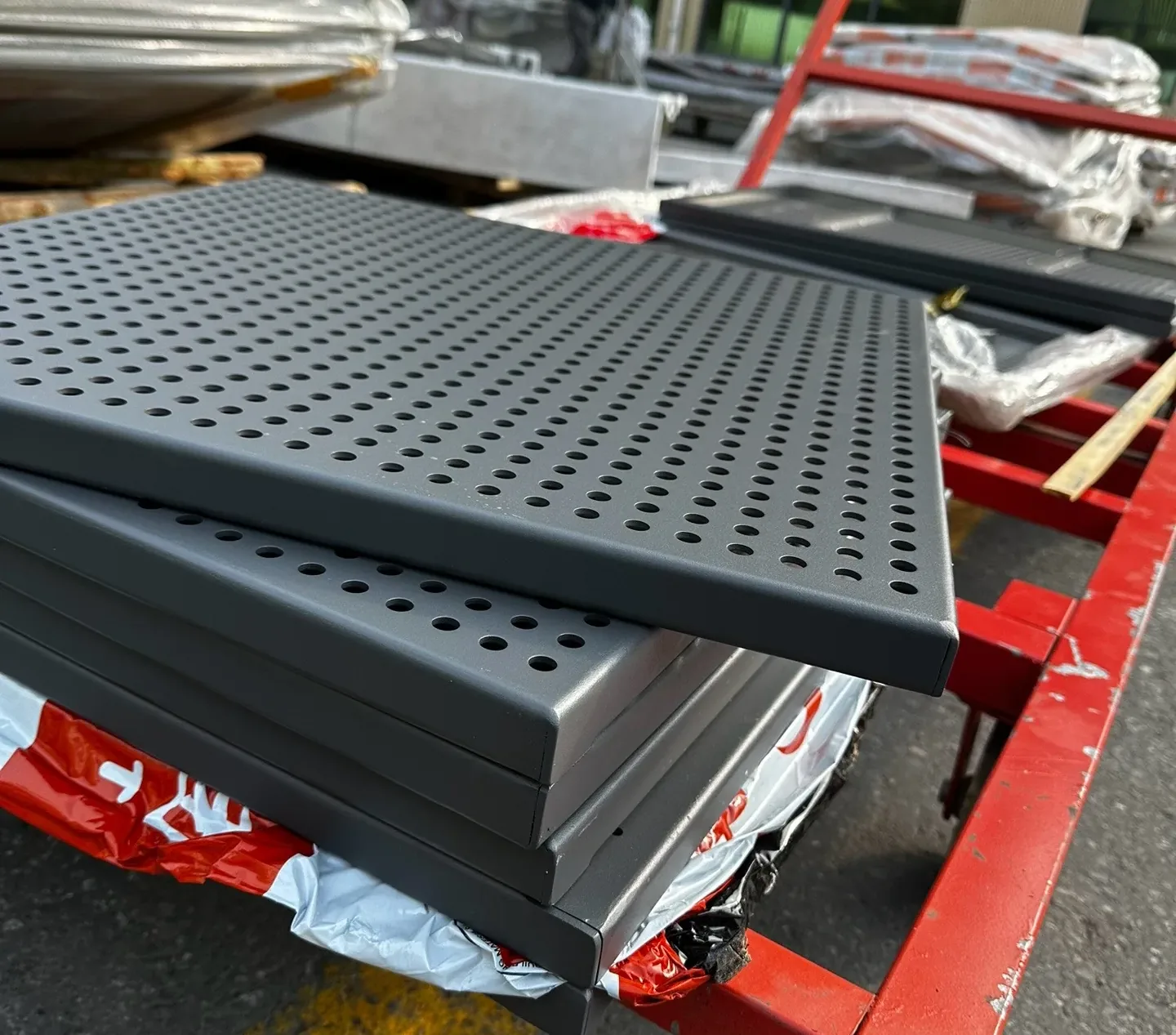
Perforated panels have a defined hole pattern and border margin, while solid panels rely on their uninterrupted visible face. A sample or drawing helps establish the intended appearance.

Perforated metal ceiling guide
The key distinction is the defined opening pattern. Both perforated and solid panels still require the material, finished module, edge, finish and support-interface information needed for a project review.
Project-first guidance
These notes identify the information that should be confirmed with the project drawing, selected material and proposed ceiling construction. They do not replace engineering, system design or test evidence.
Prepare an RFQ briefKey points
Each point should be read with the actual panel drawing and project conditions.
Perforated panels have a defined hole pattern and border margin, while solid panels rely on their uninterrupted visible face. A sample or drawing helps establish the intended appearance.
Both routes need finished dimensions, edge details, joint treatment and finish information. Perforation adds further choices about hole geometry and open area.
Do not use the comparison as a performance claim. Acoustic, airflow, fire, access and structural expectations need to be assessed for the complete specified construction.